Wednesday, February 23, 2011


During my frequent wanderings around the alleys in my neighborhood have on numerous occasions found old discarded mops that I just couldn’t resist. You never know when one might come in handy. I immediately found a place for a couple of them on heads of two home-made scarecrows in my vegetable garden.

Later for an exhibit honoring the 200th anniversary of Edgar Allen Poe’s birth I decided to create a piece that would be perfect for a mop. I painted Poe’s head in black and white on an 8”x10” panel and placed a mop on top of his head. I then dangled some black ravens from his fingers and called the piece ‘The Dreads,” as a double entendre referring to the word dread endemic in Poe’s stories and dread locks for obvious reasons. After the show I created more Dreads and turned Poe into a father. The others became his sons. That’s not to say that there won’t be any daughters brought into the family later on. I guess it depends which direction my brush takes.

Saturday, February 12, 2011

Corners


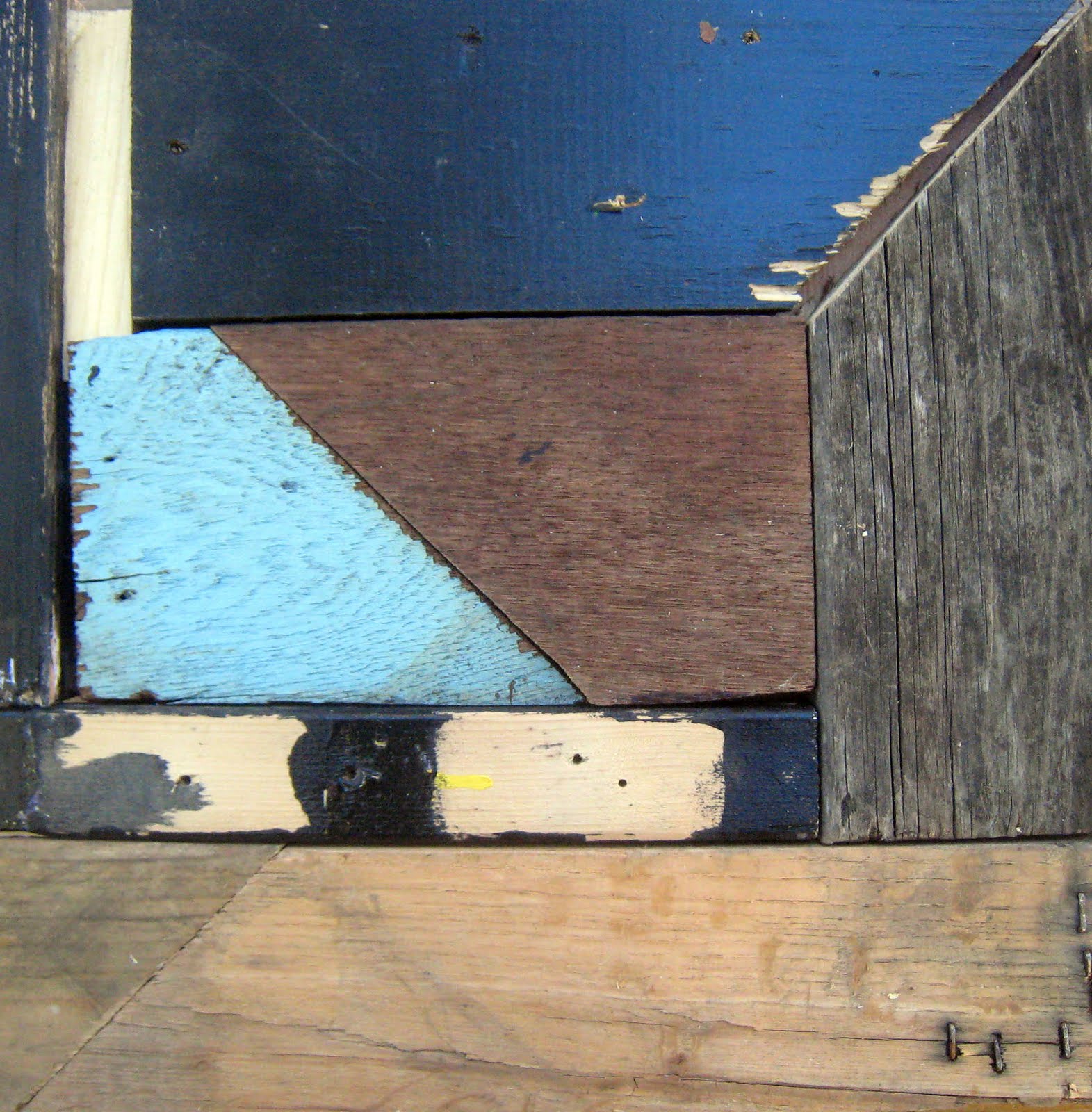
Usually I do not frame my paintings, not because I prefer them unframed but because of other constraints. Frames add a significant amount of weight and dimension to the paintings. Both elements I am in short supply of in my rather ‘compact’ studio space. Still, I was curious as to how adding a frame might transform my otherwise unadorned paintings. So I scavenged around my ‘used lumber yard’ (my garage) where, for better or worse, I save (OK, I admit it--hoard) old and used wood scraps. (You just never know when a particular piece of wood might come in handy.

So I chose my smallest paintings and decided that they might be good candidates to experiment with. Aware that my technical skills in this department were rather thin I decided that I would plan for a more rustic look to the frames. In the end I ended up framing about a dozen pieces with mixed but generally good results.

When I finished and was gathering up the corner bits and pieces from all the 45 degree miter cuts that had to make for the frames I became intrigued by how they could be fit together into these interesting shapes. Ordinarily I would have (reluctantly) disposed of the pieces but as I played with them I began form them into squares. Why squares? Who knows? That’s just how they seemed to fit. Obviously I could have gone in any direction but the squares worked for me. I used old and in some cases well worn pieces of wood so the execution on my part was a bit crude. Still, I enjoyed how each piece brought out a rustic variety of colors and textures.

For now I keep them stacked in a box. Maybe one day if I find an empty wall, I'll hang them up.

Thursday, February 3, 2011

Cubism is a Crushed Tin Can


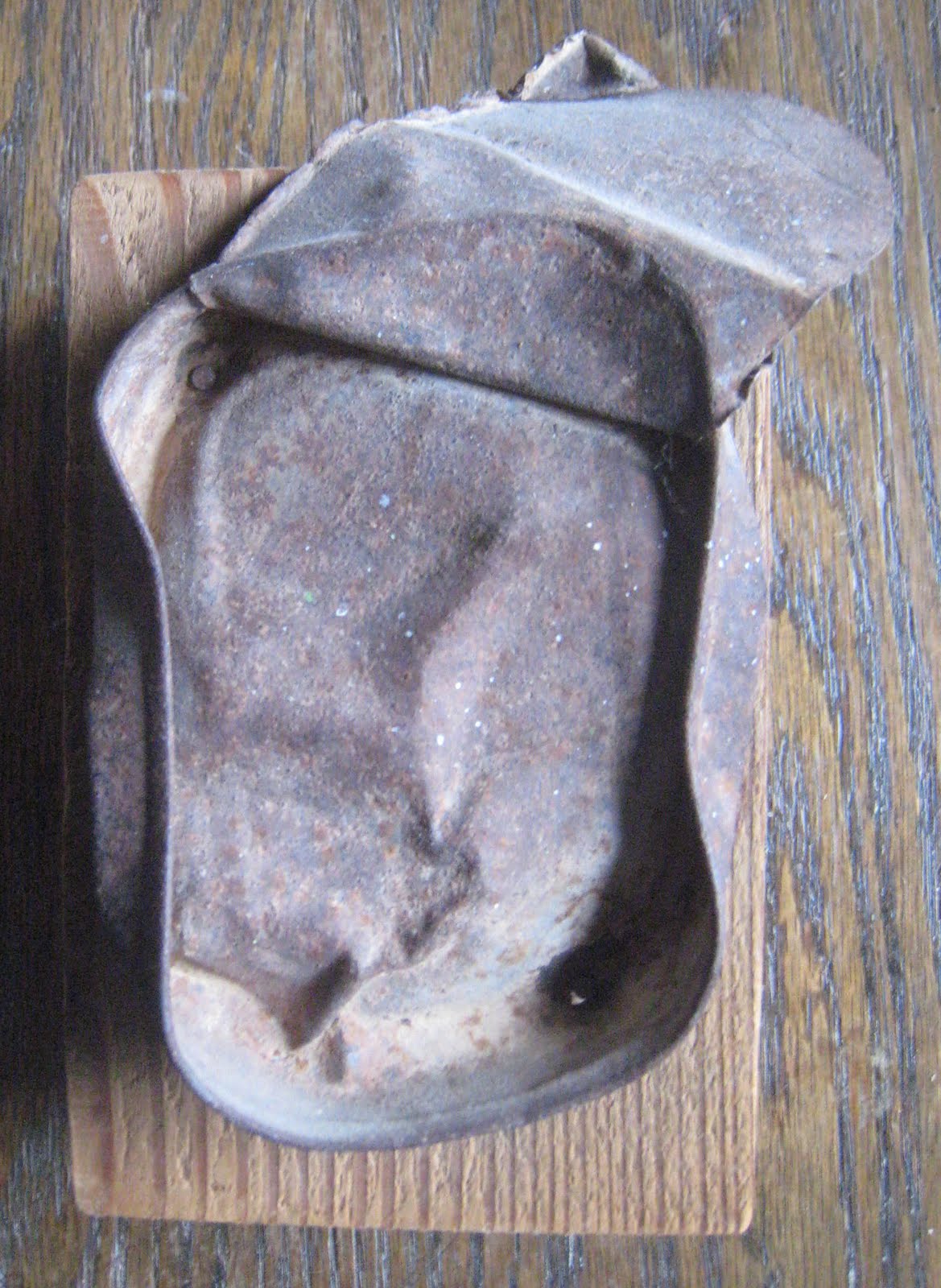
Once again I am revisiting a period of my life from over 30 years ago. As a soldier in the Israeli army we found ourselves on constant occasions in the desert in the midst of maneuvers. Much to my dismay and despair tons of garbage and spent debris would be abandoned and discarded as we moved from one spot to another. Sometimes we’d encounter piles that looked like ancient heaps of rubble, rusted and unrecognizable . Who know how long they had been sitting there? Someone once found an old hand grenade, probably from WWII.

I, on the other hand, set my sites on more mundane objects. An admirer of Marcel Duchamp, the father of found art, I was fascinated with the old rusted K-ration cans that littered the fields probably dating back to years of soldiers eating on the move. To others they were nothing more than disintegrating garbage but to me they were absolutely beautiful. I would collect them whenever I could, stuffing them into my ammunition belts, packs every open pocket I could find. Rattling cans make a lot of noise. So much for moving in stealth and maintaining an element of surprise.

You can still see the sands of the Negev and Sinai in the can crevices.

Monday, January 31, 2011

Everybody Let’s Twist


I was invited to decorate a plastic megaphone for a fund raiser. I could have taken the traditional route by painted it but after studying it a bit I realized that I was more interested a less conventional solution. Being the inveterate scavenger and collector of odds and ends that I am an idea began to emerge. I love music. I love dance. I would transform my megaphone into…….a ‘hula gogo dancer.’

I inverted an old mop and stuck the handle into a 10” section of railroad timber. This was the infrastructure for the dancer. The mop became a beehive hairdo, a former lampshade ring was used to create a hula skirt made of strings of marker tops. Her arms were made from wooden laths attached to a dowel that I passed through a hole in the mop handle and held everything together. Her hands were cut out of plastic milk jugs.

With a little paint and a sense of humor, my megaphone was transformed into a dancing queen.

Tuesday, January 18, 2011

Weaves


These are extensions of the Checkers series of made from cutting pen and ink drawings that were cut into strips and woven back together again. In these pieces I used remnants that I glued together to form strips and then them wove into 8"x8" squares. I then drew features with pen and ink and randomly assigned them to the woven squares. I enjoy the texture of the weaves contrasted with the features and how the portraits then emerges from the arrange of the features

Tuesday, January 11, 2011

Checker Portaits


On numerous occasions as a teaching artist in public schools I have given all kinds of demonstrations ranging from doing simple perspective exercises to building simple sculptures. In this case I was doing water color exercise illustrating some effects that could be achieved with water colors, not that I am anything close to an expert. But I can do some rudimentary exercises that are accessible to inexperienced students. At the end of the exercises rather than throw away the samples that I had used, I would keep them. After all it was decent paper and seemed a pity to throw it away just because it had some water color on it. After all, you never knew when it might in handy for something.

Well, I found a way for them to come in handy. When all else fails, weave them.

I ended up applying a white wash of acrylic paint over the water color designs to create a neutral field, allowing for the water color to bleed into the whitepaint. I then used a thinned down black paint and a bit of ink to draw very simple but similar portraits on twelve small squares of the used water color paper squares that I had used as samples with the kids. I then cut pairs of drawings into strips and wove them back together, as I have done on countless of other occasions. The results, though not new, are always a surprise. I’m calling this series ‘Checker Portraits.’